By Thomas Davis, DNAP, MAE, CRNA
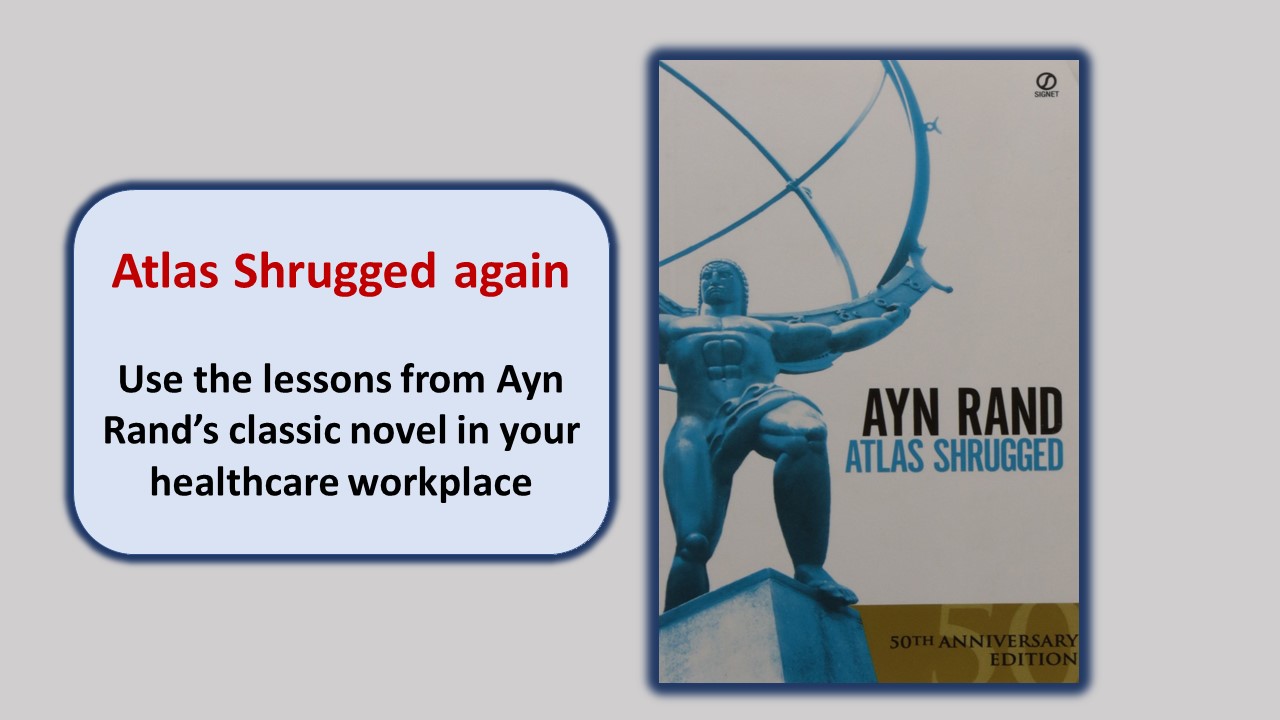
In 1957, author, Ayn Rand, released the powerful novel, Atlas Shrugged. Over 60 years later, the book continues to provide insight for creative entrepreneurs and fodder for heated debate between capitalists and socialists.
The storyline of the novel showcases business tycoons who use only objectivism, rather than faith or emotion, to obtain evidence, ascertain the truth and set the best course of action. The courageous Atlas characters who use evidence to gain insight and then act rise to the top, and the compliant, under-achieving sycophants become dependent upon the government for protection. As the story progresses, the most creative minds and bodies vanish one by one until, finally, their previous importance/value to national socioeconomics is revealed. Readers who doggedly complete the 1168-page book until Dagny departs, will gain a new appreciation for the value of logic and individualism in the creation of success both in business and one’s personal life.
“What greater wealth is there than to own your life and to spend it on growing? Every living thing must grow. It can’t stand still. It must grow or perish.” ~Ayn Rand
Today’s workplace continues to have leaders with insight who can create a vision, look at reality and develop a plan to achieve a goal. Author Robert Tracinski applied the principles from Ayn Rand’s classic novel to modern business leadership in his article published in The Federalist (2017). Building upon Trancinski’s work, allow me to take the 7 lessons that he identified in Atlas Shrugged and apply them to healthcare leadership.
- Know the business from the ground up. The quickest way to fail is to lead people who know more about the business than you do. A grocery store chain in Texas is known for requiring every manager/leader hired by the company to spend the first 6 months stocking shelves and running cash registers before moving on to their intended position. Likewise, healthcare leaders at every level must know more than how to do their job; they must also know the culture of the organization. A Chief CRNA or an OR manager must know the overall workflow of the perioperative process and then follow up by appreciating the jobs done by other members of the team.
- Earn respect. Entry level respect is earned by bearing the title of “designated boss,” whereby, authority is based solely on position. True respect is earned over time and grows from personal relationships based on honesty, transparency and integrity. Recognizing and rewarding excellence while mentoring those in need of improvement shows that the leader knows the difference between high and low quality work – an insight that will earn respect from the entire team.
- Always take responsibility. Crisis management is an important aspect of leadership that comes with the job. You might not be responsible for creating the state of affairs, but when a worker presents you with a problem, don the mantle of leadership by finding a solution. Your title places you in a position to deliver like Dagny, and when you’re asked, “Whose responsibility was this?” there is only one answer; “Mine.”
- Deal with the best talent. When you’re hiring personnel, look beyond technical skills by recruiting and hiring only people who are competent and who share your vision/values. You can teach skills that are needed for success however you can’t teach work ethic, honesty and integrity. Hire for values and teach the skills. When seeking a mentor or expanding your professional network, “play up” and associate with those who have a proven record for success.
- Set an innovative vision. Focus on the work at hand and insist on excellence in all you do, but never stop looking over the horizon and planning for the future. You can break the monotony of status quo by having a vision, sharing it and motivating your team to achieve it instead of creating a Groundhog’s Day Every today is another step toward a better tomorrow.
- You are not a leader unless you have followers and gaining support is essential. A vision that enhances your personal profit and someone else’s loss is doomed for failure; however, a shared vision that encourages others to gain in tandem with you is likely to be achieved. It’s OK to reap personal gain but not at the expense of others.
- Don’t prop up the losers. When a new leader inherits a team, not every member is a high achiever, and some people are dead weight. With mentoring and professional development, the low achievers will either come to life or they will sink further into being parasites and hangers-on who drain the whole team’s energy and resources. If the less productive members of The Team do not respond promptly with a change of attitude, cut them loose quickly and cleanly with serving leader civility.
The fact that Atlas Shrugged continues to be discussed and debated decades after its publication underscores the impact of the lessons put forth in the book. The characters who made an impact were the ones with a vision; they used solid personal values, they dealt fairly with others and, collectively, they elevated society. Modern Hanks in healthcare are NOT building railroads or marketing Reardon steel. They ARE leading the medical industry into the future using the lessons from Atlas Shrugged to build a new paradigm; one that is patient-centric; one that ensures safety and guarantees better outcomes for each client. Hop aboard the Taggart train and ride the Rearden rails over the horizon to a healthcare system that is built upon the lessons put forth by Ayn Rand: The assurance that Dagney Delivers.
Tom is a noted author, enthusiastic speaker, committed leadership developer and superb clinical anesthetist. Contact tom@prosynex.com to book a speaking engagement.